
What Happens When You Stop Guessing and Start Studying Chess With a System?
Adults with careers, businesses, and limited time — who decided their chess should reflect who they are.
This Is Why Smart People Get Stuck at Chess
You're not here by accident.
The people who find their way to this page are a specific type of chess player.
They're analytical.
They solve complex problems for a living. They've built careers, businesses, things that matter. And they apply that same drive to chess — studying, watching, practicing — and still can't understand why the rating doesn't reflect who they are.
That gap is frustrating. Not because you're losing.
Because you know you're better than your results.
Most of them have a goal that sounds ambitious to everyone else — reaching 2000, beating titled players, breaking into the top 1% of chess players worldwide. And they don't say it out loud much, because it sounds crazy.
It's not crazy. It's just that nobody has shown them the right path.
Here's what I've learned coaching adults like you: the problem was never intelligence. The problem was never effort. It was three things:
The platforms are designed to keep you playing — not improving. Chess.com, Lichess — built like every other app.
The algorithm rewards engagement, not growth. So you play another game. And another. Emotionally, without structure, without direction. And every game you play like that, you're not just wasting time. You're making your bad habits stronger.
Everyone gives you the same advice — and none of it is built for your situation. Do tactics. Study openings.
Watch grandmaster games. That advice was designed for kids who trained six hours a day since they were twelve. You have a career, a business, real responsibilities. You need to know exactly what to fix first — not spend two years hoping something clicks.
Nobody has looked at YOUR games specifically. Not the engine. Not YouTube. Not a book. They tell you what move was wrong. They can't tell you why you keep making the same mistake.
They can't see the one habit that's costing you more points than anything else.
That requires someone who watches how you think — not just what you play.
You've already proven you can build things. You've already proven you can figure things out. Chess is no different — you just need the right system and someone to show you exactly where to start.
That's what this is for.
Testimonials
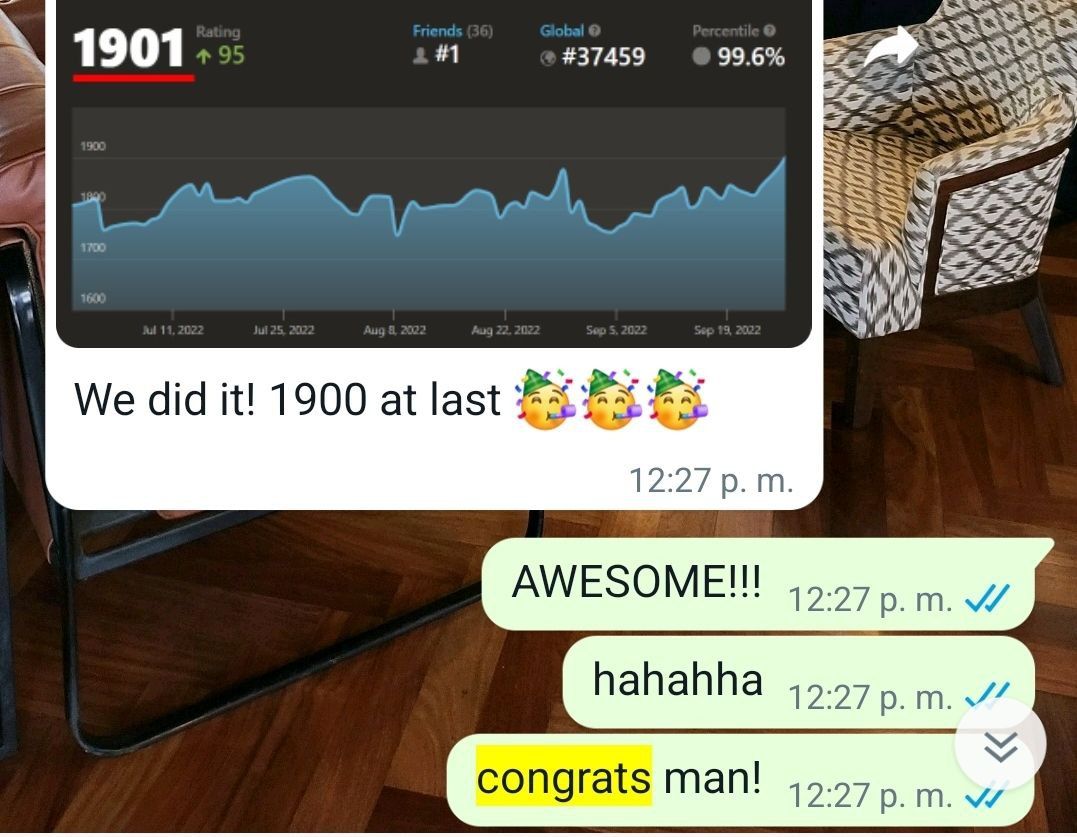
Working with Diego yields immediate results. Over the course of our time together, my rating on chess.com has increased from under 1600 to over 1900, and I am still hopeful that I can crack the 2000 barrier soon. Here is how Diego helped me: he worked very hard to adapt my opening repertoire to better fit my playing style and strengths. he showed me how to think correctly in different phases of the game: how to treat quiet positions, critical moments, and endgames. through reviewing my games, he noticed patterns in where I tended to struggle, which I would not necessarily have noticed myself or even with the help of an engine. he created a customised training program based specifically on what's holding me back. he is always available to answer questions. Diego is also an invaluable partner if you're looking to play OTB classical tournaments. With his help, I gained several memorable victories against higher-rated opponents. Thanks to his coaching, I understand chess more, and more importantly I enjoy chess more. Highly recommended.

I've worked with Diego - he is outstanding! I tend to "overthink" positions. Diego has helped me take a step back and evaluate the position before I calculate. Most players rated under 1,800 (let's say) tend to calculate before they evaluate if they evaluate at all. Taking a moment to evaluate allows us to assess the strengths and weaknesses of our position *and* our opponent's position. Sure, maybe you spotted a tactic that wins a piece, but did you miss a stronger idea? Did you win a piece but ultimately get mated? Did you see a line with potential that fizzles out? But you played it anyway? Been there, done that in the past... ...but I don't do it as often now. This has been a huge improvement for me. I also tend to have "good" days and "bad" days. On some days, it's as if I don't even know how to play. Diego provided a framework - a decision making map - that helps me better evaluate and then calculate moves that improve my position. This framework forces me to slow down and methodically evaluate the position, then calculate, then consider the options, then choose, then blunder check, then move. He's just a fantastic coach, and I'm thrilled to see him recognized here! Diego works hard, he makes himself readily available, and he's very, *very* serious about his students' improvement. He is simply outstanding!

I've worked with multiple coaches before Diego, he is by far the best! I've benefitted a lot both from a 'chess' prospective and also from a 'psychological' aspect. He lays a clear structure and plan for his students, I love a coach who has structure in his teaching methods! He underpins the importance of evaluating a position which is a prerequisit to thinking of candidate moves. When we analyze my games, he opens new dimensions of middle game ideas that I completely did not consider! He takes his students' chess journey very seriously, I feel that he takes them on as a personal project to improve their performance. When I play a great game, I can't wait to show it him! When I play a bad one, I feel that I disappointed him, but then we objectively review the game and try to figure out what led to my mistakes.
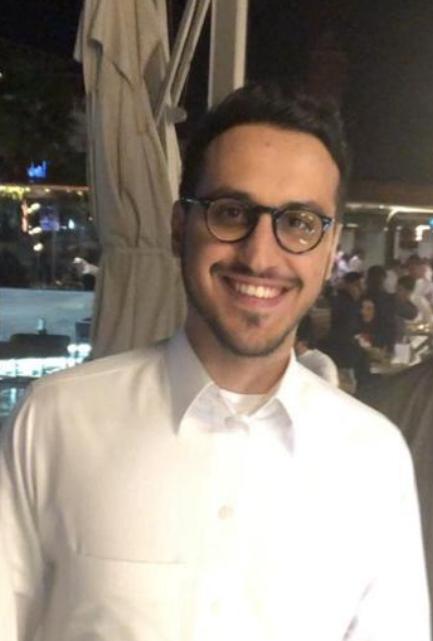
My chess study was sporadic and chaotic. Mostly doing tactics since I had been told that was what was most needed at my level. I did a ton of tactics, but was not improving. Wasted time studying material too far above or below my level. My study is now organized. I have a daily/weekly study plan. I am studying things that are improving my thinking and appropriate for my level. I felt like a lot of my previous study was wasting time on things too far above or below my level. I am understanding how to analyze a position better. Mostly, I am studying and learning things appropriate to bring me to the next level. I am studying much more efficiently which is extremely important for me because my free time to study is very limited. Another thing which is really important is that Coach Diego motivates me and encourages me. While studying on my own, I was very discouraged in my lack of improvement to the point I was feeling like giving up. Now, things are clicking and I am seeing improvement. His ability to ascertain each student’s specific needs, identify their strengths and weaknesses and then create custom lessons to maximize learning efficiency is one of the many things that make him a top coach.

Client's success
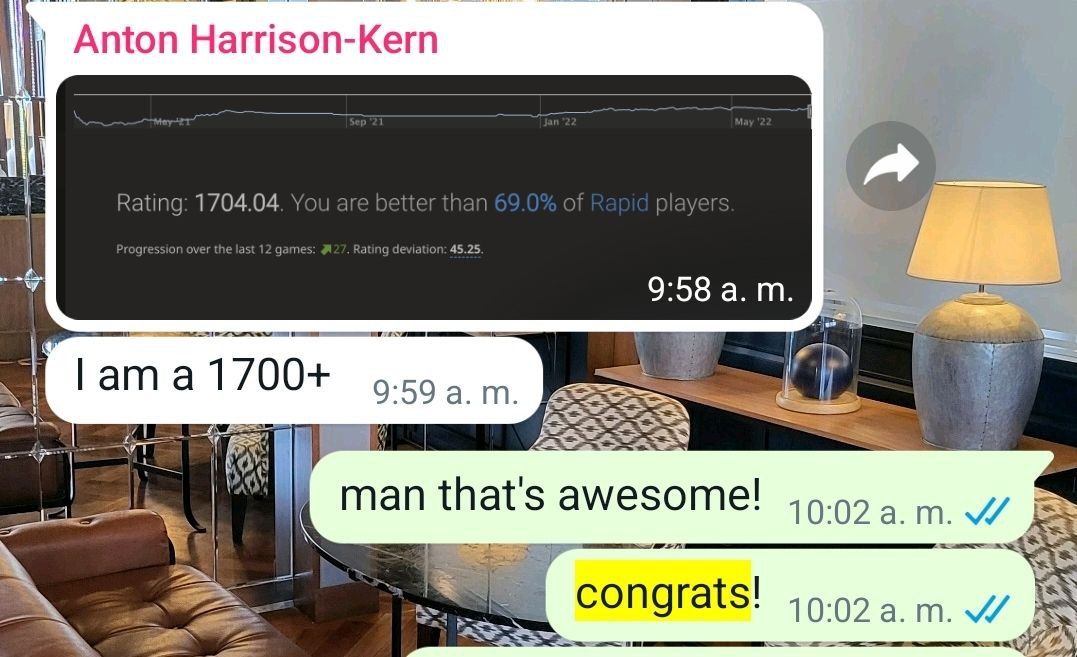
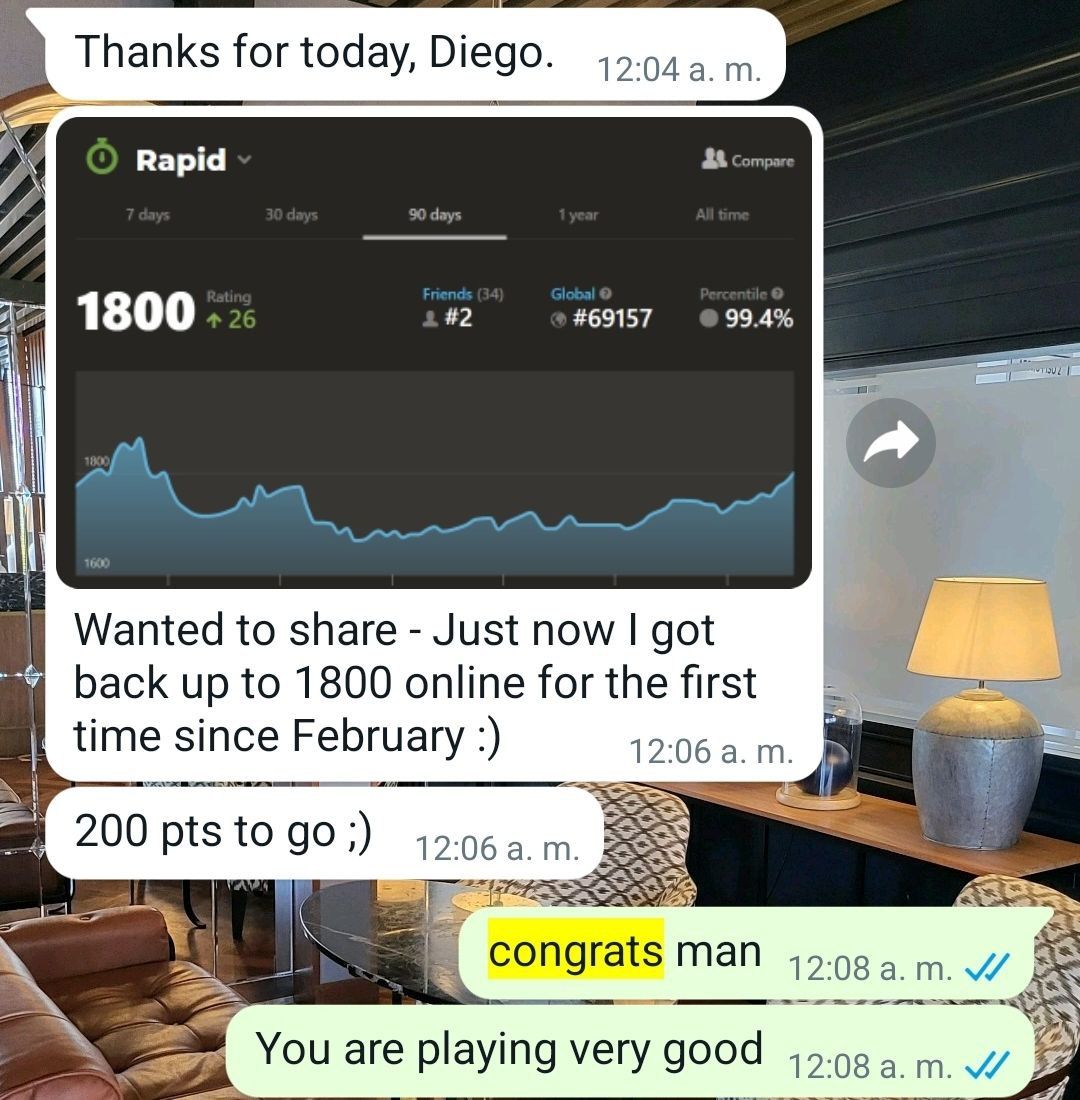
Every one of these players had a career, a business, a life outside chess. Limited time. High standards. And a rating that didn't reflect who they were. Until they fixed the right thing first.
Type of results #1: Beating players they had no business beating.
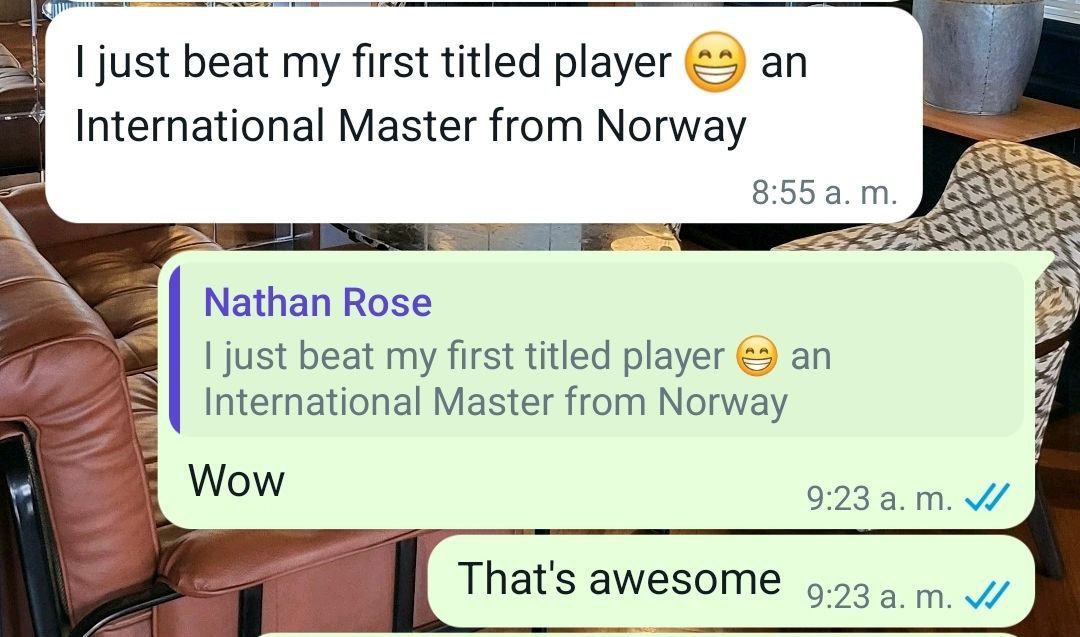
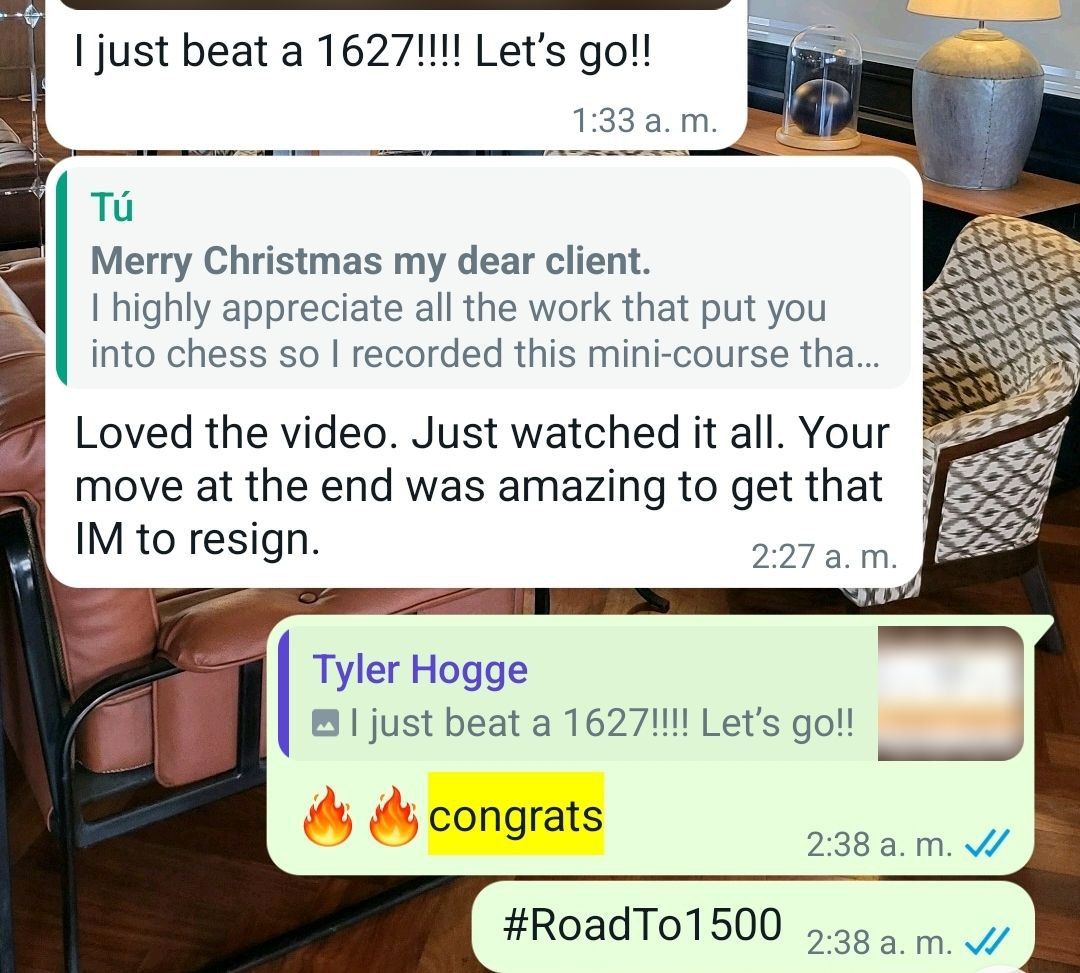
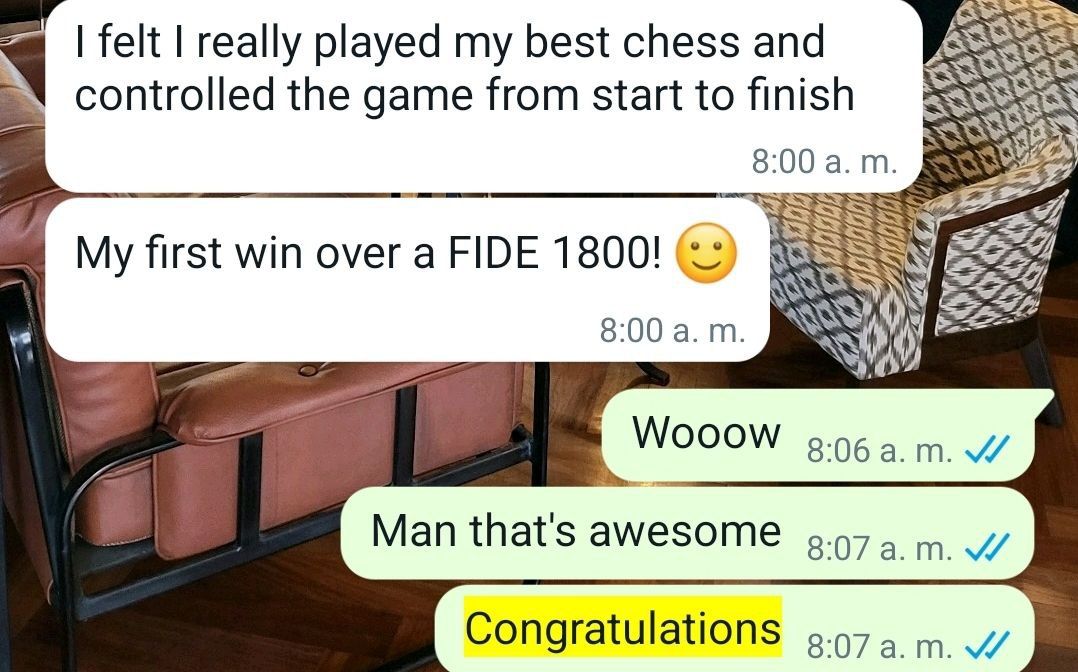
Type of results #2: Rating jumps in the first weeks — not months.
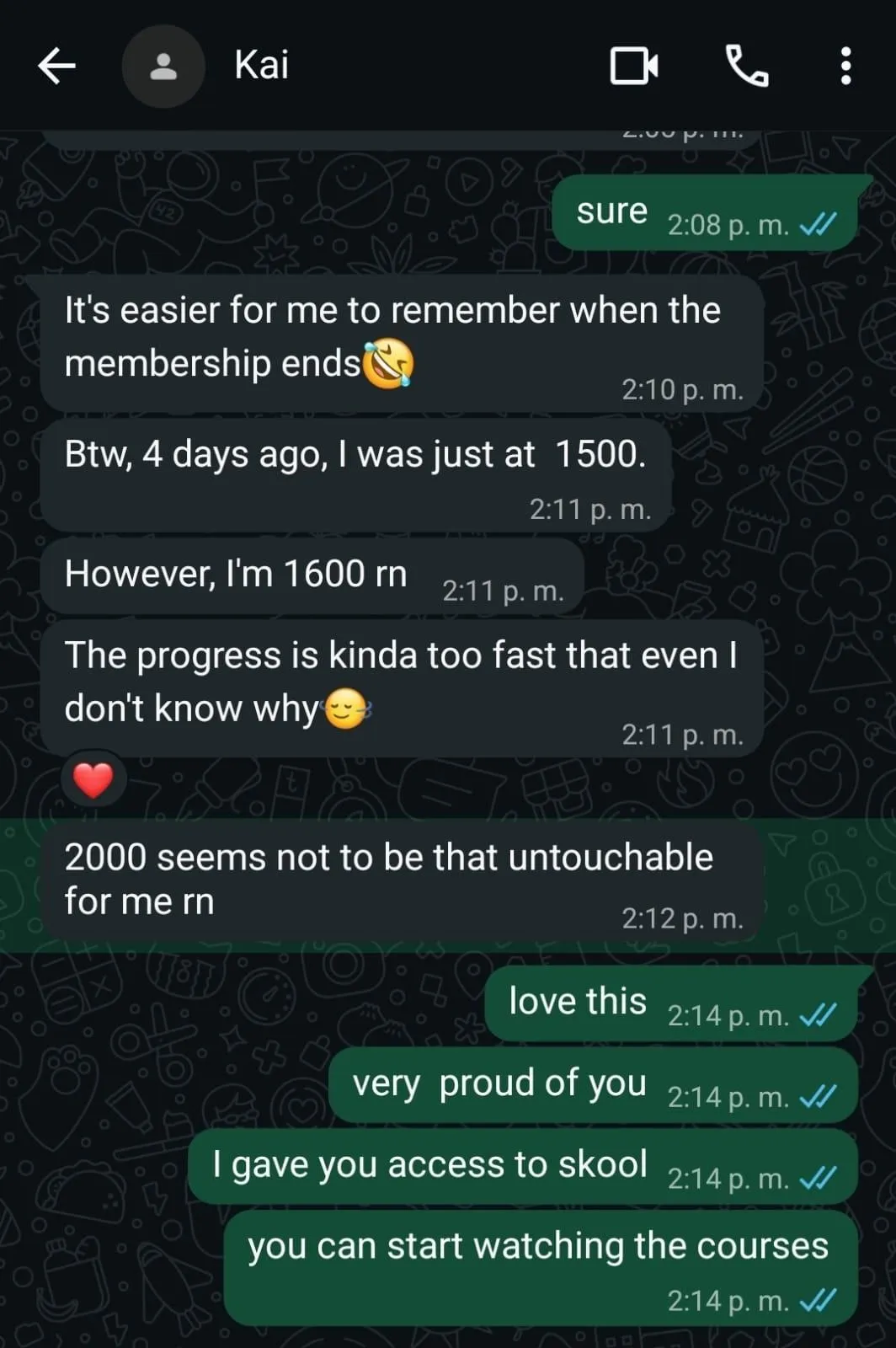
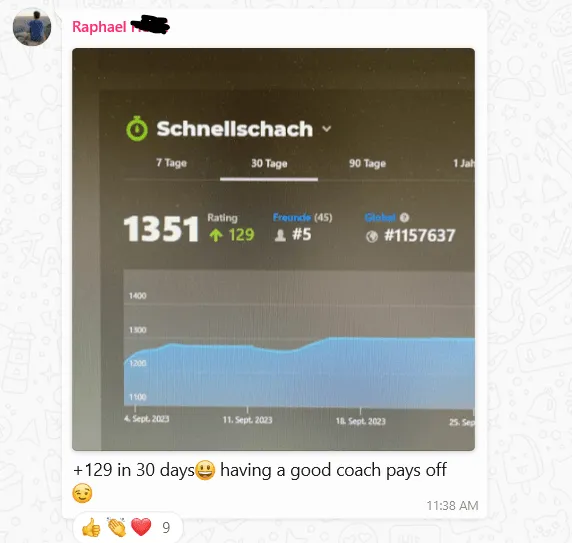
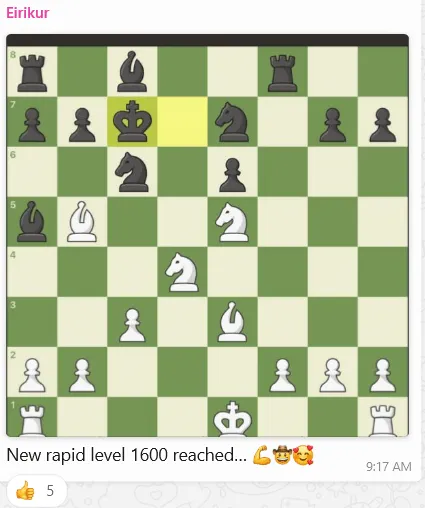
Type of results #3: Learn the real principles of chess & how to think like a 2000 rated player
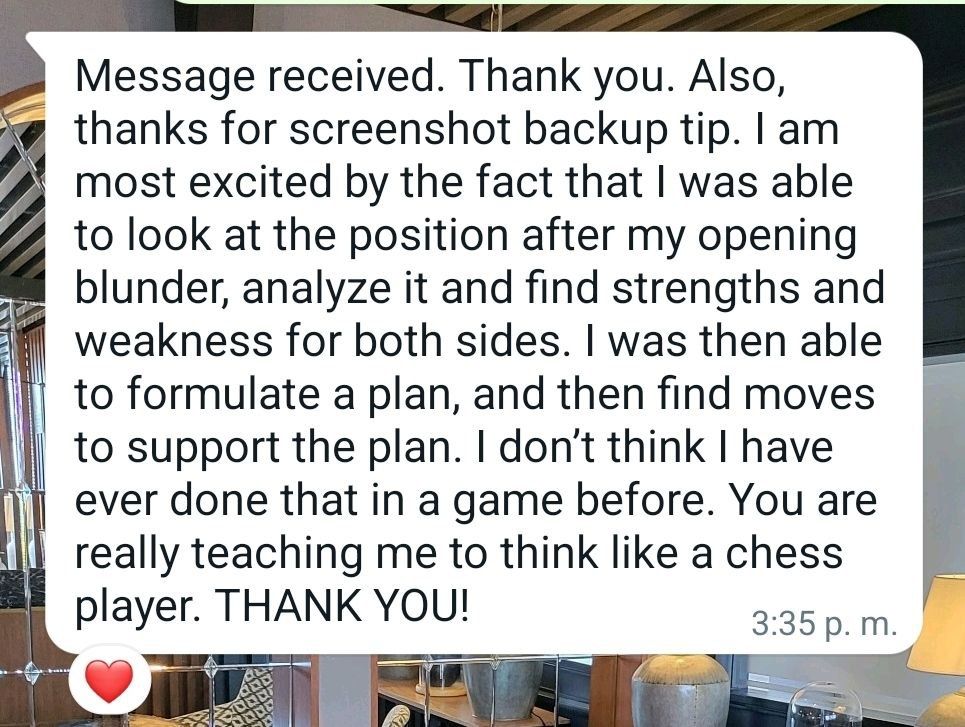
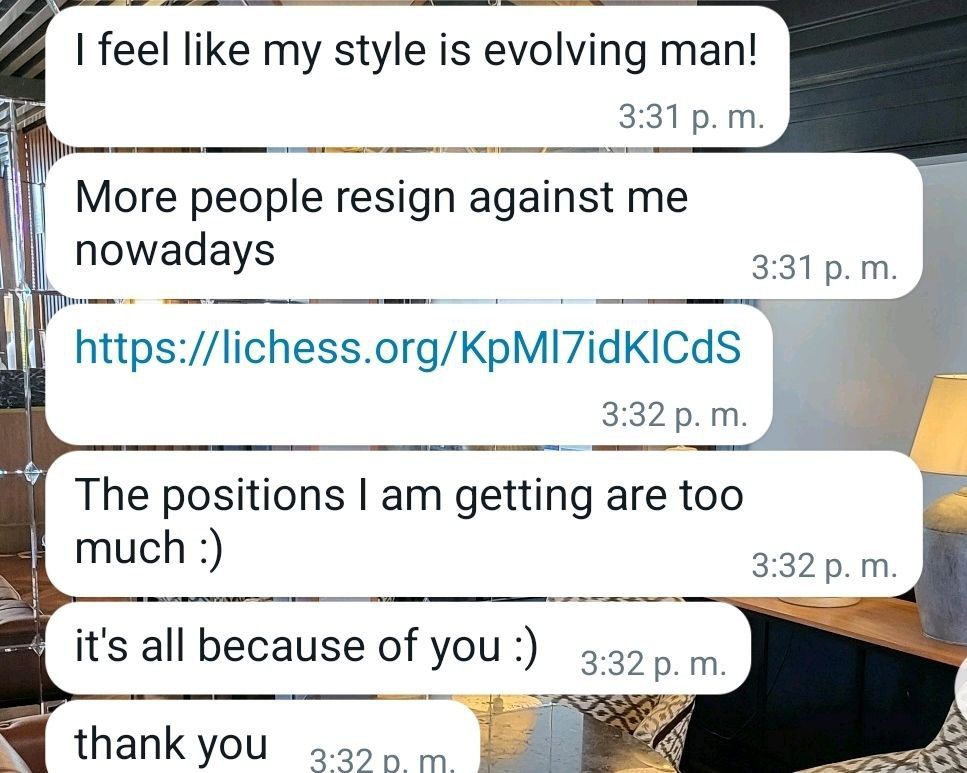
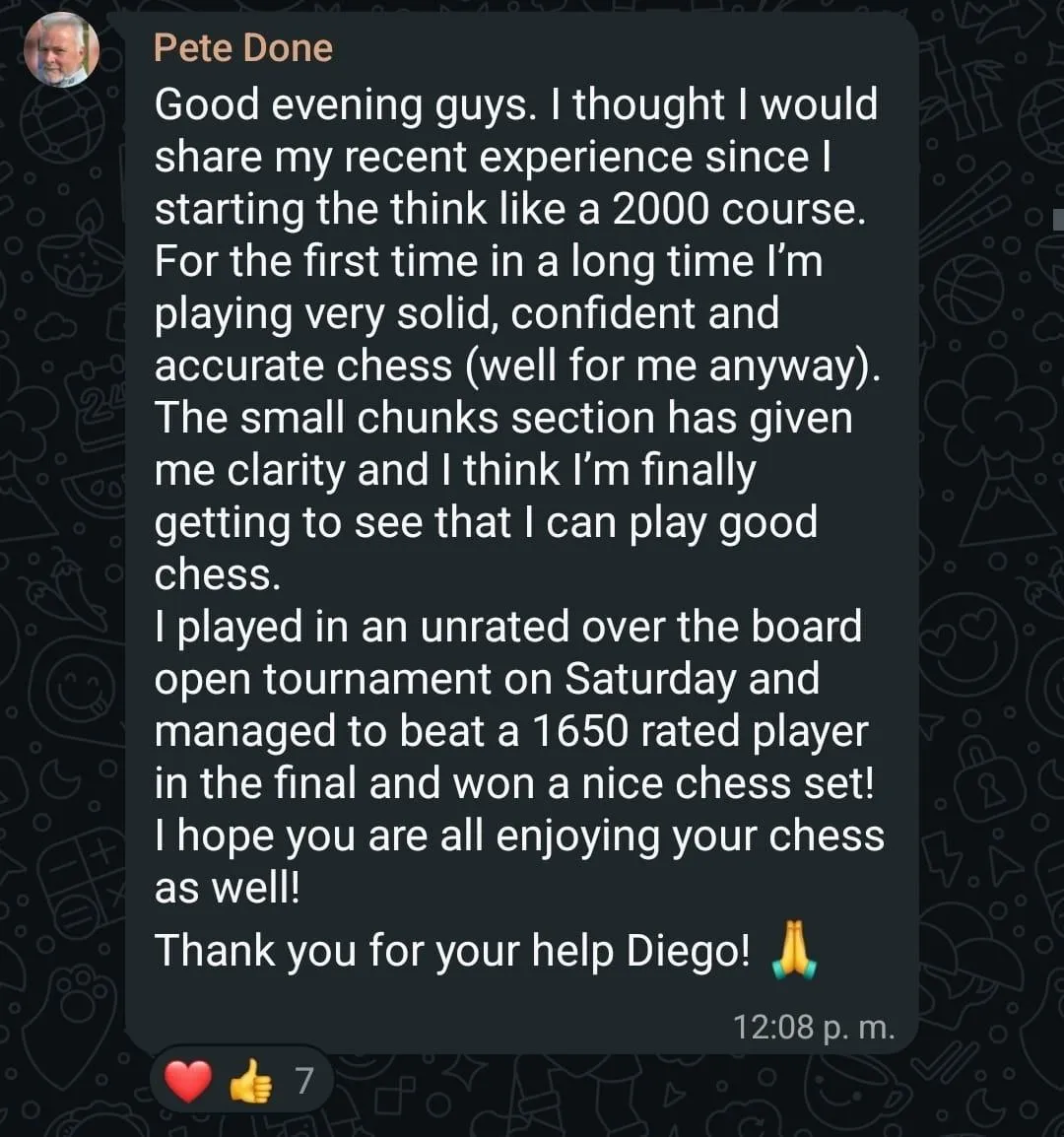
Type of results #4: Breaking 2000. The goal most think is unreachable.
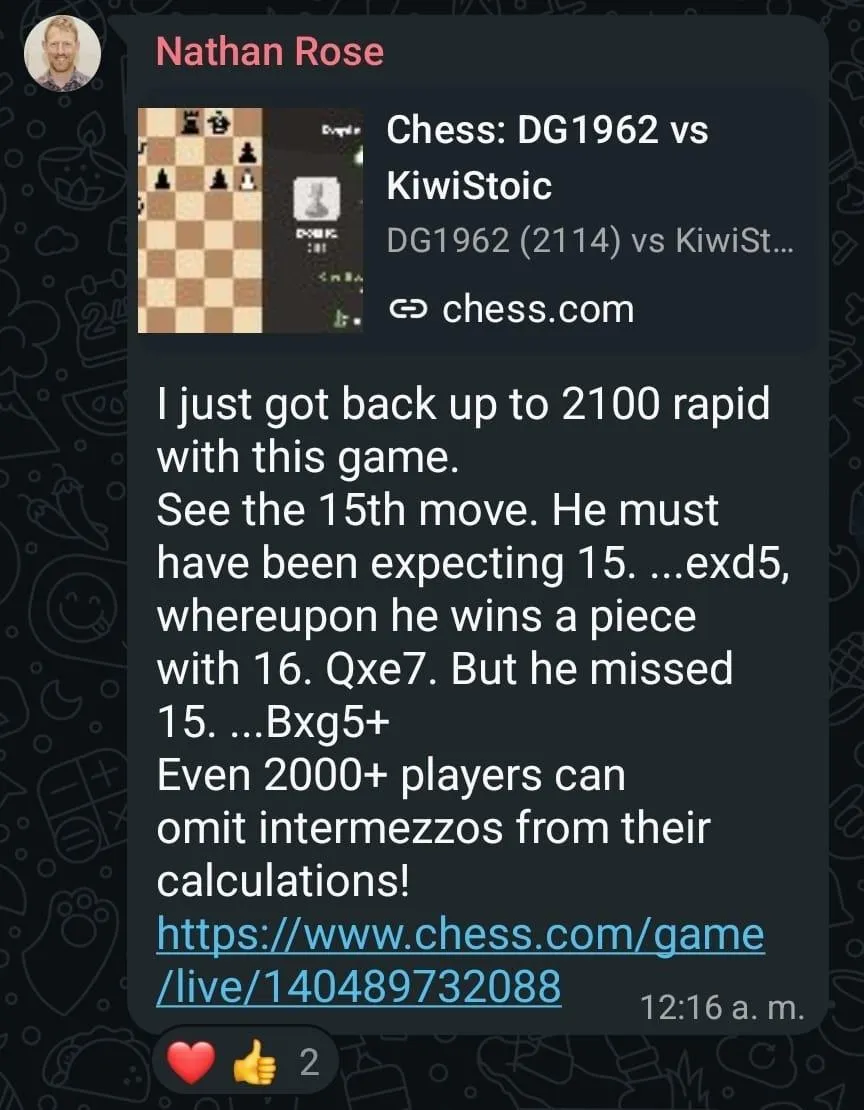
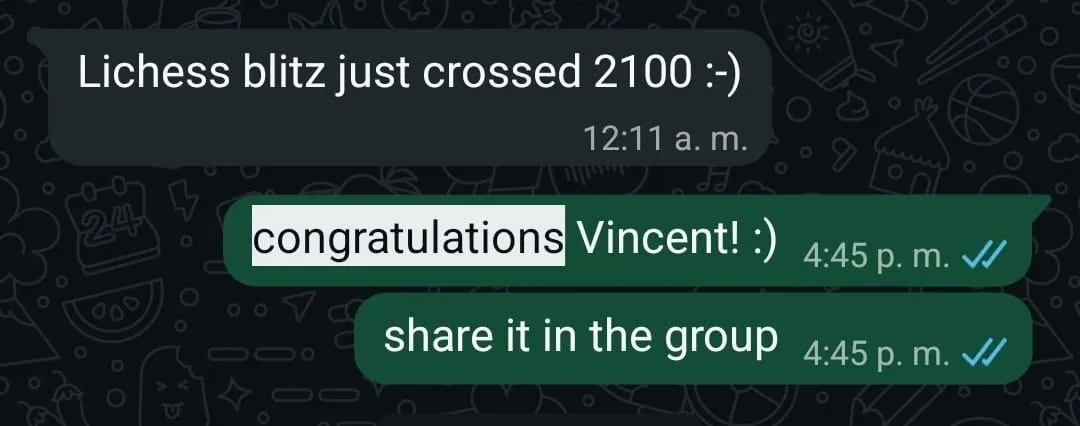
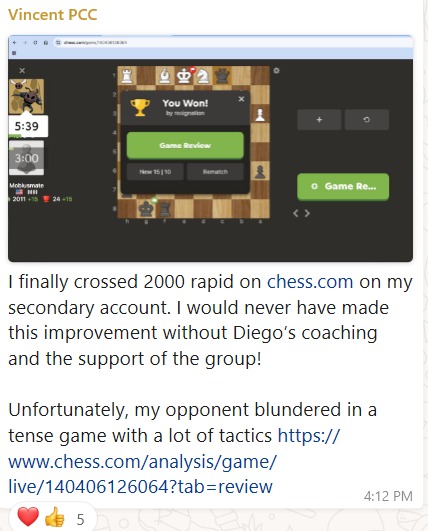
Type of results #5: Playing chess they're actually proud of.
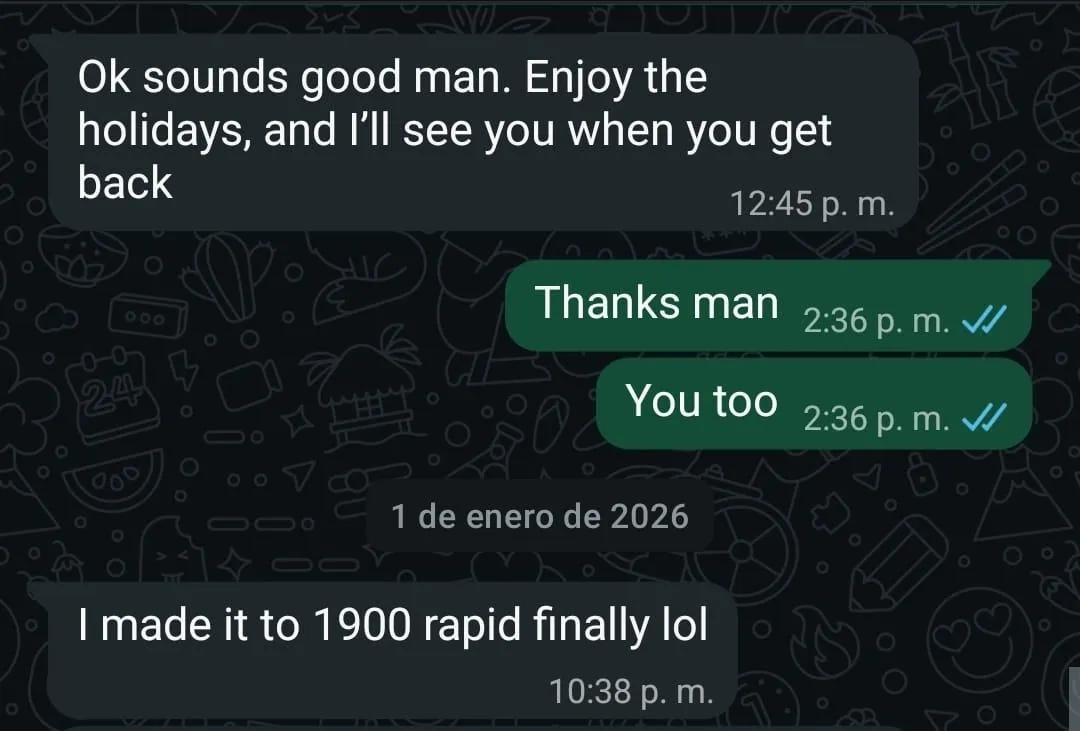
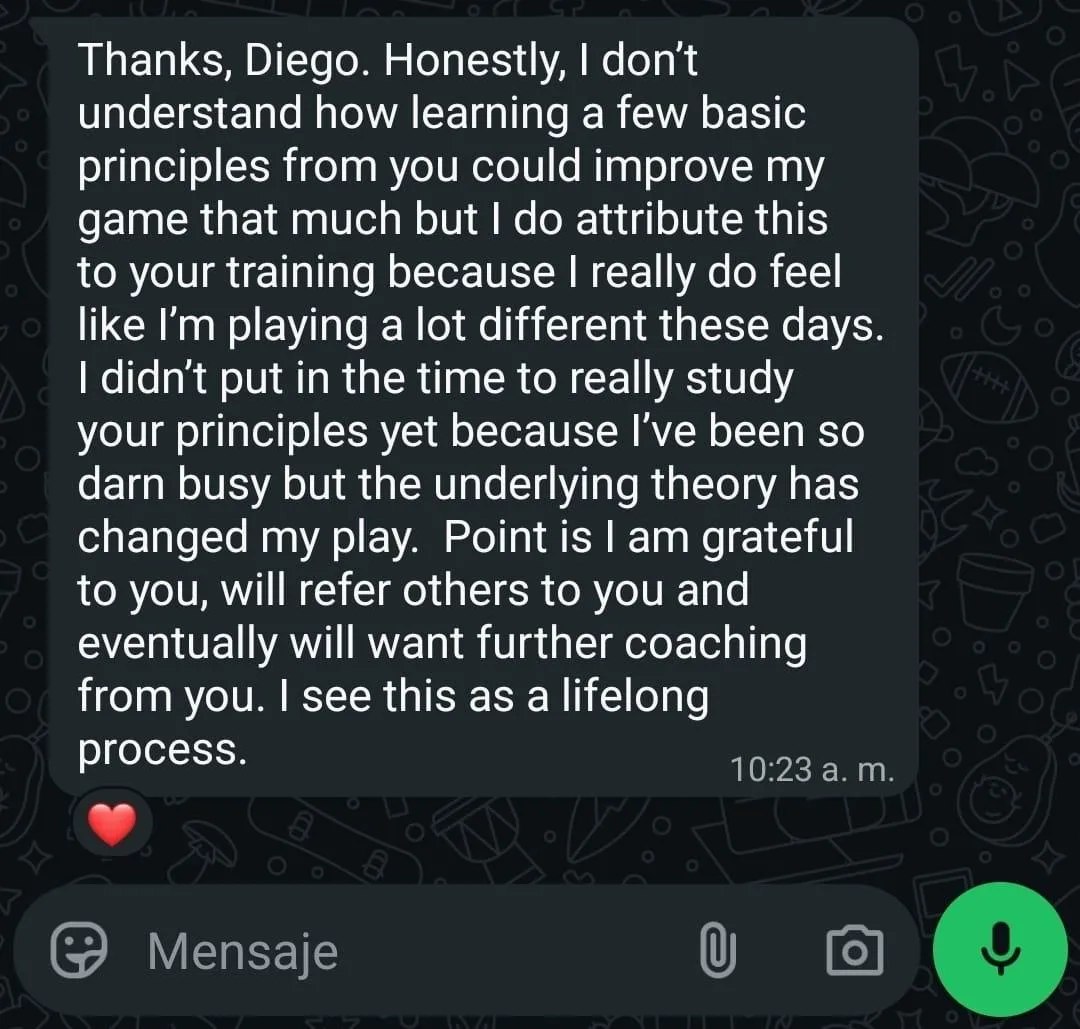
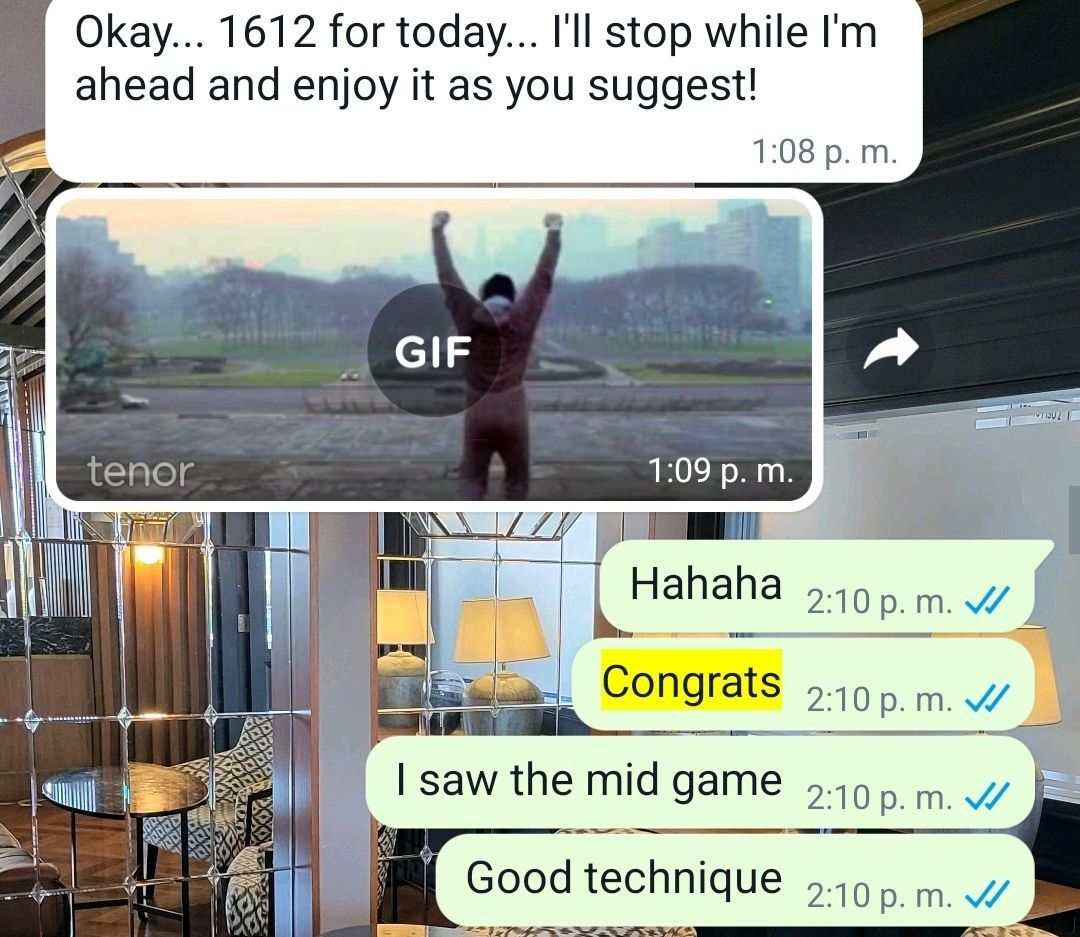
Wanna work with me?
Start with a free call. We look at your games together and I show you exactly what's holding you back. If we're a good match — I'll show you how we can get you to your goals.